
Senior Citizen Pension Schemes 2026: India is home to one of the fastest-growing elderly populations in the world. The number of citizens aged sixty and above has already crossed sixteen crore, and demographers expect this figure to double by 2050. For a country where family support systems are gradually shrinking under the pressures of urban migration, nuclear households, and rising living costs, the question of how senior citizens will sustain themselves financially after their working years has become one of national importance. Pension schemes, whether run by the central government, state governments, or private financial institutions, exist precisely to answer that question. They are designed to convert a lifetime of savings, or in some cases a simple entitlement of citizenship, into a steady and predictable stream of income that can carry a person through the later decades of life with dignity and independence.
This Senior Citizen Pension Schemes 2026 article takes a close look at the senior citizen pension landscape in India as it stands in 2026. It explains how the major government schemes work, what returns and benefits they offer, who is eligible, and how private retirement products fit into the picture. It also looks at proposed reforms that are expected to reshape old-age income security in the months ahead, and offers practical guidance on choosing a scheme that suits an individual’s circumstances.

Why Pension Planning Matters More Than Ever?
Retirement in India was once cushioned by joint family living, where children and grandchildren shared the responsibility of caring for elders. That arrangement has weakened considerably. Studies suggest that a large share of elderly Indians still depend on their children or extended family for financial support, but this dependency often comes at the cost of autonomy and peace of mind. At the same time, medical inflation has consistently outpaced general inflation, meaning that healthcare costs during old age can quickly erode whatever savings a retiree has accumulated. Add to this the fact that life expectancy has been rising steadily, which means retirement savings now need to last twenty, twenty-five, or even thirty years beyond the last working paycheck.
A well-structured pension plan addresses all of these pressures simultaneously. It provides financial independence, so a retiree is not forced to rely entirely on family goodwill. It offers protection from market volatility, since many of the flagship schemes guarantee a fixed rate of return rather than exposing savings to the ups and downs of equity markets. It comes with tax advantages that make long-term saving more efficient. And, in the case of government-backed programmes, it often comes with the added comfort of sovereign backing, which means the promised payouts are extremely unlikely to be disrupted.
Government Pension Schemes: The Backbone of Retirement Security
The Government of India, through various ministries and financial institutions, has built a network of pension products aimed specifically at the elderly. These Senior Citizen Pension Schemes differ in their structure. Some are savings-linked instruments where a person deposits a lump sum and receives regular interest. Others are contributory pension systems built up over decades of working life. And some are welfare-oriented cash transfers meant for economically weaker sections who may never have had the means to build formal savings. Understanding each of these categories helps in choosing the right combination.
Senior Citizens’ Savings Scheme
The Senior Citizen Pension Schemes, commonly known by its acronym, remains one of the most popular and trusted instruments for retirees. It offers one of the highest interest rates among small savings instruments, at 8.2 percent per annum as of the first quarter of 2026, with interest paid every quarter. Eligibility generally begins at 60 years of age, though the threshold is lowered to 55 for those who have opted for voluntary retirement, and to 50 for retired defence personnel. A person can invest anywhere between one thousand rupees and up to thirty lakh rupees individually, and since the scheme allows joint accounts between spouses, a couple can together deposit as much as sixty lakh rupees. The account matures after five years, and account holders have the option to extend it once for an additional three years, giving flexibility to those who do not need immediate access to the principal.
Deposits made under this scheme also qualify for a tax deduction under Section 80C of the Income Tax Act, which makes it doubly attractive for retirees looking to reduce their taxable income while securing a dependable quarterly payout. Because the scheme is available at post offices as well as designated bank branches across the country, it remains accessible even in smaller towns and rural areas, which is an important consideration for a population that is not concentrated only in metropolitan centres.
Pradhan Mantri Vaya Vandana Yojana
Administered by the Life Insurance Corporation of India, this scheme is structured as an assured pension product rather than a simple savings account. It guarantees a return of 7.4 percent per annum over a policy term of ten years, and the pension can be paid out monthly, quarterly, half-yearly, or annually, depending on what the subscriber prefers. The scheme is open to any citizen aged sixty or above, and because the payout structure is fixed at the time of purchase, it offers a high degree of predictability. This makes it particularly suitable for retirees who want to know exactly how much income they can expect each month for the next decade, without any exposure to interest rate fluctuations or market movements. A successor product to this scheme, sometimes referred to by a similar name with variations across different states, offers a slightly higher return of around 9 percent per annum, again managed by LIC, combining pension income with an element of insurance protection.
National Pension System
The National Pension System, or NPS, functions differently from the schemes described above because it is a long-term, contribution-based retirement account rather than a one-time deposit product. Subscribers contribute regularly during their working years, and the accumulated corpus is used at retirement to provide a monthly pension. It is mandatory toinvest a minimum of 40 percent of the accumulated corpus in an annuity plan at the time of exit, which ensures that a portion of the savings is converted into a guaranteed income stream for life rather than being withdrawn as a lump sum. The scheme is also regarded as one of the most effective tax-saving instruments available in India, allowing a saver to claim deductions of up to one and a half lakh rupees under Section 80C, and an additional fifty thousand rupees under Section 80CCD(1B) of the Income Tax Act.
Under the revised 2026 guidelines, Indian citizens between the ages of eighteen and seventy are eligible to join, and subscribers who wish to continue building their corpus can now remain invested or keep contributing up to the age of eighty-five, which allows for a considerably longer runway of compounding growth than was previously permitted. This extension is particularly valuable for people who continue to earn an income well past the traditional retirement age, whether through consulting work, part-time employment, or self-employment, and who want to keep building their retirement corpus for as long as possible.
Atal Pension Yojana
Aimed primarily at workers in the unorganised sector who do not have access to formal employer-sponsored retirement benefits, the Atal Pension Yojana guarantees a fixed monthly pension ranging from one thousand to five thousand rupees, depending on the contribution amount and the age at which a person joins. Because contributions are linked to age at entry, joining earlier in life results in a lower monthly contribution requirement for the same eventual pension amount.
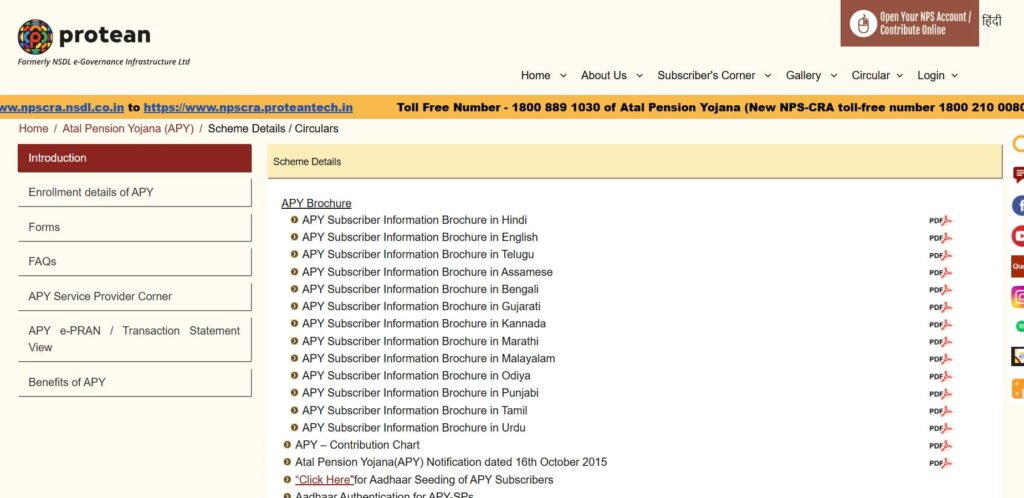
The scheme is backed by the government, which adds a layer of assurance for subscribers who might otherwise have no structured old-age income at all. This scheme has played a particularly important role in extending pension coverage to gig workers, small traders, agricultural labourers, and others who fall outside the formal pension net that covers salaried employees.
Employees’ Pension Scheme
For those who spent their working lives in salaried employment covered by the Employees’ Provident Fund Organisation, the Employees’ Pension Scheme, often referred to by its shorthand EPS-95, provides a monthly pension linked to years of service and average salary drawn during the last several years of employment. Unlike the National Pension System, which follows a defined contribution structure, the Employees’ Pension Scheme follows a defined benefit structure, meaning the eventual pension amount is calculated using a formula rather than depending purely on market-linked returns.

There has been sustained public and legal debate in recent years over enhancing the minimum pension amount under this scheme and updating the wage ceiling used in the pension calculation formula, and pensioners and employee unions continue to press for revisions that would bring payouts closer to a living wage for retirees who depend on this as their primary source of income.
Indira Gandhi National Old Age Pension Scheme
This Senior Citizen Pension sits apart from the savings and contribution-based products because it is a direct welfare transfer aimed at citizens living below the poverty line who may never have had the means to build formal retirement savings. The central government provides two hundred rupees per month for beneficiaries between the ages of sixty and seventy-nine, and five hundred rupees per month for those aged eighty and above.
State governments typically add their own top-up amounts on top of this central contribution, which means the total monthly payout can range anywhere from four hundred to three thousand five hundred rupees depending on which state a beneficiary lives in. This variation across states reflects differing fiscal capacities and policy priorities, and it means that two individuals with identical eligibility profiles can receive quite different amounts simply because of where they reside.
State-Level Old Age Pension Schemes
Beyond the central government’s welfare framework, individual states run their own supplementary or standalone old age pension programmes, often tailored to local economic conditions and cost of living. Gujarat runs the Vridh Sahay scheme offering between four hundred and one thousand rupees per month, Bihar’s Mukhyamantri Vridhjan Pension Yojana provides four hundred rupees monthly, Rajasthan’s Mukhyamantri Vridhavastha Samman Pension Yojana ranges between one thousand and one thousand five hundred rupees, Delhi’s Old Age Pension Scheme offers between two thousand and two thousand five hundred rupees, and Telangana’s Aasara scheme provides two thousand and sixteen rupees per month.
Other notable state programmes include YSR Pension Kanuka in Andhra Pradesh, along with schemes covering healthcare through Varishta Mediclaim, travel concessions, and welfare initiatives such as the Rashtriya Vayoshri Yojana and the Annapurna Scheme, which together form a broader safety net addressing not just income but also nutrition, mobility, and health. Because eligibility criteria, documentation requirements, and payout amounts differ from one state to another, it is important for applicants to check with their local social welfare department or the relevant state portal rather than assuming that rules are uniform nationwide.
Applying for these state Senior Citizen Pension Schemes has become considerably easier in recent years, with most states now offering online registration through dedicated welfare portals. Applications are typically free of charge and can be submitted online, though technical issues such as incorrect category registration can sometimes prevent an eligible applicant from seeing all the schemes they qualify for, in which case contacting the relevant state helpline is usually the fastest way to resolve the problem.
Healthcare Coverage Alongside Income Support
Pension income alone does not fully address the financial vulnerability that comes with old age, because healthcare expenses often represent the single largest and most unpredictable cost that senior citizens face. Recognising this, the government has significantly expanded health insurance coverage for the elderly in recent years. Since October 2024, all Indian citizens aged seventy and above have been entitled to five lakh rupees of annual health coverage under the Ayushman Bharat PM-JAY scheme, regardless of their income level.
Senior citizens who already have family coverage under PM-JAY receive an additional top-up of five lakh rupees specifically earmarked for their own healthcare needs, which effectively doubles the protection available to them. This is a meaningful development because it decouples healthcare access from income eligibility criteria that govern many other welfare schemes, ensuring that even elderly citizens who are not classified as below the poverty line can access substantial hospital coverage without depleting their savings or pension income.
The Proposed Senior Citizens New Scheme 2026
Perhaps the most closely watched development in this space is a new welfare framework currently being discussed under the working title of the Senior Citizens New Scheme 2026. Unlike existing programmes that focus narrowly on either income or healthcare, this proposed initiative is designed as a broader welfare framework addressing income security, healthcare access, housing safety, mobility, and social participation together. The centrepiece of the proposal is a monthly pension of up to nine thousand rupees for eligible seniors, intended to help cover everyday expenses such as groceries, electricity bills, medicines, and other basic household needs. The scheme is expected to be open to Indian citizens aged sixty and above, with income-based eligibility criteria likely to apply in some cases to ensure that the benefit reaches those who need it most. Financial assistance under this proposed scheme is expected to be delivered through the Direct Benefit Transfer system, which would ensure transparency and timely disbursement of payments directly into beneficiaries’ bank accounts.
It is worth stressing that as of the time of writing, detailed guidelines covering the application process, required documentation, and the exact rollout timeline have not yet been finalised or officially released. Anyone interested in this scheme should watch for official government announcements rather than relying on preliminary reports, since the specifics of eligibility thresholds and benefit amounts could still change before implementation. The broader motivation behind the proposal reflects growing recognition that rising living costs, medical inflation, and longer life expectancy have made retirement increasingly challenging, with many seniors struggling to balance healthcare expenses against daily necessities.
Private Sector Pension and Annuity Products
Alongside government schemes, private insurance companies and financial institutions offer a wide range of retirement products that can complement or supplement government-backed savings. These generally fall into a few broad categories. Traditional guaranteed annuity plans function much like the Pradhan Mantri Vaya Vandana Yojana in that they promise a fixed monthly, quarterly, or annual payout in exchange for a lump sum premium, often bundled with a degree of life insurance protection. These products appeal to conservative savers who prioritise certainty over growth potential.
At the other end of the risk spectrum, retirement-oriented unit-linked insurance plans allow policyholders who are comfortable with some market exposure to grow their retirement corpus through equity and debt market investments, while still retaining a life cover component. These plans typically offer monthly annuity options that continue until the death of the policyholder, and they can be attractive to individuals who begin retirement planning earlier in life and have a longer time horizon over which market volatility tends to smooth out.
Deferred annuity plans represent another category, where an individual pays premiums during their working years and the payout phase begins only after a chosen deferment period, allowing the corpus to grow before withdrawals start. Immediate annuity plans, by contrast, convert a lump sum into income payments starting almost right away, which makes them suitable for someone who has just retired and needs income without delay.
When evaluating private pension products, it is worth paying close attention to a few factors beyond just the headline interest rate or projected return. These include the reputation and claim settlement track record of the insurer, the flexibility of payout options, whether the plan includes a return of purchase price to nominees upon the policyholder’s death, surrender charges if the policy needs to be exited early, and how the product’s returns compare after accounting for the fees and charges embedded in the plan. Because these are long-term commitments, often spanning a decade or more, it is generally advisable to compare multiple products and, where the amounts involved are significant, consult a qualified financial advisor before committing.
How to Choose the Right Combination of Schemes?
Given the range of options available, most financial planners suggest that senior citizens rarely rely on a single scheme in isolation. Instead, a layered approach tends to work best. The Senior Citizen Pension Schemes or the Pradhan Mantri Vaya Vandana Yojana can serve as a stable, guaranteed-income foundation, since both offer predictable quarterly or monthly payouts backed by the government or a public sector insurer. On top of this foundation, the National Pension System can be used by those who are still earning some income, whether through continued employment or self-employment, to keep building a supplementary corpus with the added benefit of significant tax deductions.
For those who fall into economically weaker categories, the Indira Gandhi National Old Age Pension Scheme and relevant state-level top-up programmes provide a welfare cushion that does not depend on prior savings at all. Finally, private annuity or ULIP-based retirement products can be layered in for individuals who have surplus savings beyond what the government schemes can accommodate, given that most public schemes come with maximum investment caps.
Healthcare coverage should be planned alongside income schemes rather than as an afterthought. With Ayushman Bharat PM-JAY now extending five lakh rupees of coverage to all citizens aged seventy and above regardless of income, and an additional top-up available for those with existing family coverage, senior citizens and their families should ensure this registration is completed well before it becomes urgently needed, since enrolling during a medical emergency is far more stressful than doing so in advance.
Practical Steps for Applying for Senior Citizen Pension Schemes
For government savings schemes such as the Senior Citizen Pension Schemes, applications can be made directly at post offices or designated bank branches by submitting proof of age, identity, and address, along with the initial deposit amount. For the Pradhan Mantri Vaya Vandana Yojana, applications are processed through LIC, either at branch offices or increasingly through online channels, with the applicant needing to select the payout frequency and provide bank account details for direct credit of the pension amount. For the National Pension System, registration can be completed online through the official NPS portal or through points of presence such as banks and post offices, with a permanent retirement account number issued upon successful registration.
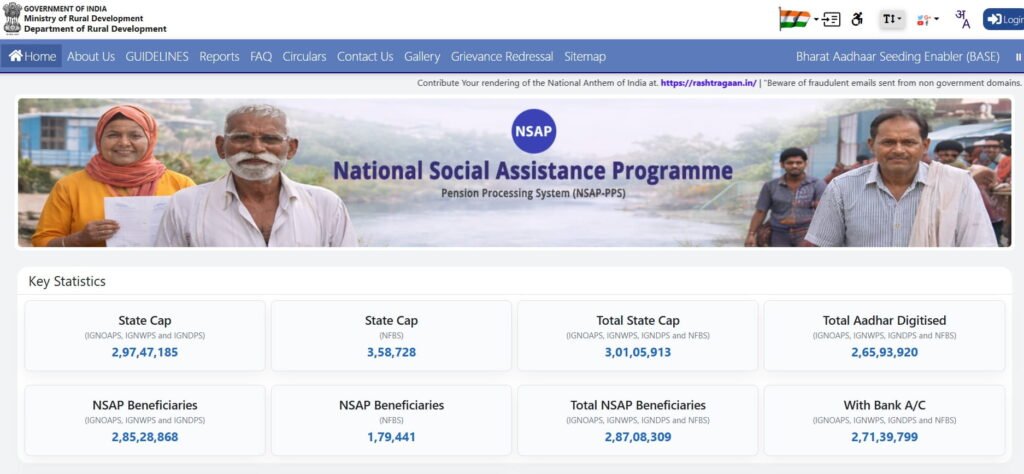
For welfare-based schemes such as the Indira Gandhi National Old Age Pension Scheme and its various state-level counterparts, applications are generally submitted through state social welfare department portals or through common service centres in areas with limited internet access. Applicants typically need to provide proof of age, a residence certificate, an income or below-poverty-line certificate where applicable, and bank account details for the direct benefit transfer. Given that documentation requirements vary somewhat by state, it is advisable to check the specific requirements listed on the relevant state portal, or to visit the local welfare office for guidance, particularly for elderly applicants who may need assistance navigating online systems.
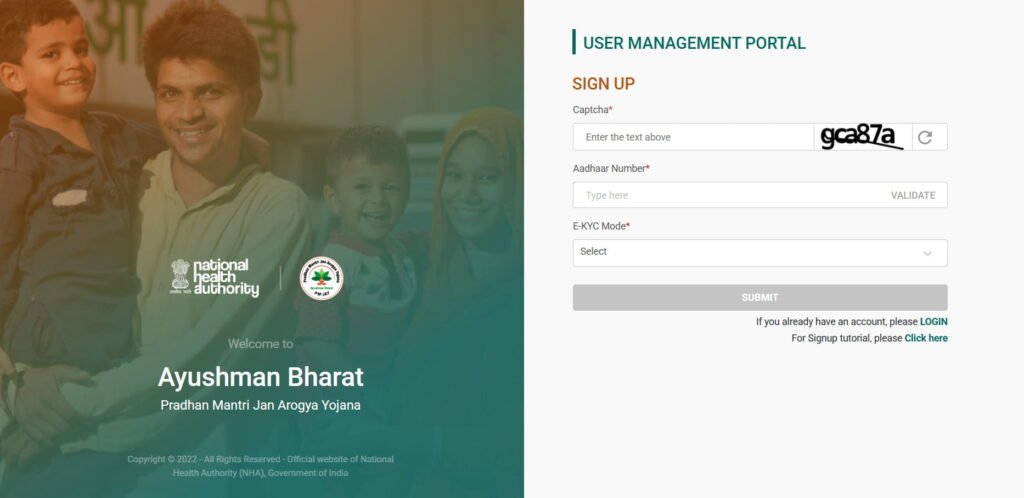
For Ayushman Bharat PM-JAY registration, eligible senior citizens can visit their nearest empanelled hospital, a common service centre, or use the official beneficiary portal to check eligibility and complete enrolment, after which an Ayushman card is issued that can be used to access cashless treatment at empanelled hospitals across the country.
Tax Considerations for Retirees
Tax planning remains an important part of retirement income strategy even after regular employment ends. Interest income from schemes such as the Senior Citizens’ Savings Scheme is taxable, but senior citizens benefit from a higher basic exemption limit compared to younger taxpayers, along with a specific deduction available under Section 80TTB for interest earned on deposits, which is more generous than the deduction available to non-senior taxpayers under the general provision.
Contributions to the National Pension System continue to offer some of the most substantial deductions available anywhere in the Income Tax Act, making it worthwhile even for those who are past the traditional retirement age but still have taxable income from consulting, rental property, or other sources. Pension income received under the Employees’ Pension Scheme and similar defined-benefit programmes is generally taxed as salary income in the hands of the recipient, and it is worth factoring this into overall tax planning rather than assuming pension income is automatically tax-free.
Looking Ahead
The overall direction of policy in this space suggests that India is moving toward a more integrated approach to elderly welfare, one that combines income support, healthcare access, and social protection rather than treating pensions as a standalone financial product. The proposed Senior Citizen Pension Schemes 2026, if implemented as currently described, would represent a meaningful step in this direction by bringing together a monthly cash benefit with attention to housing, mobility, and social participation. At the same time, existing pillars such as the Senior Citizens’ Savings Scheme, the National Pension System, and Ayushman Bharat PM-JAY continue to be strengthened through periodic revisions to interest rates, contribution limits, and coverage thresholds, reflecting an ongoing recognition that a growing elderly population requires a correspondingly robust and evolving support system.
For individuals approaching retirement, or for families helping elderly parents plan their finances, the most useful approach is to start early, diversify across a mix of guaranteed-return government schemes and, where appropriate, private products, register promptly for available healthcare coverage, and stay alert to new announcements such as the proposed 2026 scheme so that eligible benefits are not missed once formal guidelines are released. Retirement planning is rarely a one-time decision; it is an ongoing process of reviewing entitlements, adjusting contributions, and making sure that as circumstances change, whether through rising healthcare needs or shifts in family support, the underlying financial foundation remains steady enough to preserve both security and independence in the years that matter most.
Conclusion
Senior citizen pension schemes in India in 2026 reflect a system that has grown considerably more layered and responsive over the past several years. From guaranteed-return savings instruments and annuity products to contributory pension accounts and welfare-based cash transfers, there is now a scheme suited to nearly every income level and life circumstance.
The expansion of healthcare coverage under Ayushman Bharat PM-JAY, combined with the possibility of a more comprehensive welfare framework on the horizon, suggests that policymakers are increasingly treating old-age security as a multidimensional issue rather than a purely financial one. For senior citizens and their families, the task now is to understand which combination of these schemes best fits their needs, complete the necessary registrations well in advance, and stay informed as new programmes move from proposal to implementation.
Official Sources
| Ayushman Bharat PM-JAY | CLICK HERE |
| National Pension System | CLICK HERE |
| Atal Pension Yojana | CLICK HERE |
Senior Citizen Pension Schemes – FAQ’s
Who is eligible for the Senior Citizen Pension Scheme in 2026?
Eligibility depends on the specific scheme. Most government pension schemes require the applicant to be at least 60 years old, while some schemes also consider income levels, place of residence, and socio-economic status.
What documents are required to apply?
Generally, applicants need an Aadhaar card, proof of age, proof of address, bank account details, passport-sized photographs, and any income or residence certificates required by the specific scheme.
How can I apply for a senior citizen pension?
Applications can usually be submitted online via the official government portal or offline at a nearby CSC (Common Service Centre), Panchayat office, or Social Welfare Department office.
How much pension can a senior citizen receive?
The pension amount varies depending on the scheme and the state. Central and state governments may offer different monthly pension benefits based on eligibility criteria.
Can a person avail of more than one pension scheme simultaneously?
In most cases, a beneficiary cannot claim multiple government social pension schemes for the same purpose. However, if eligible, they can still receive a pension from the EPFO, NPS, or private retirement plans.
How can I check the status of my pension application?
Applicants can track the status of their application on the government portal using their application number or by visiting the office where the application was submitted.