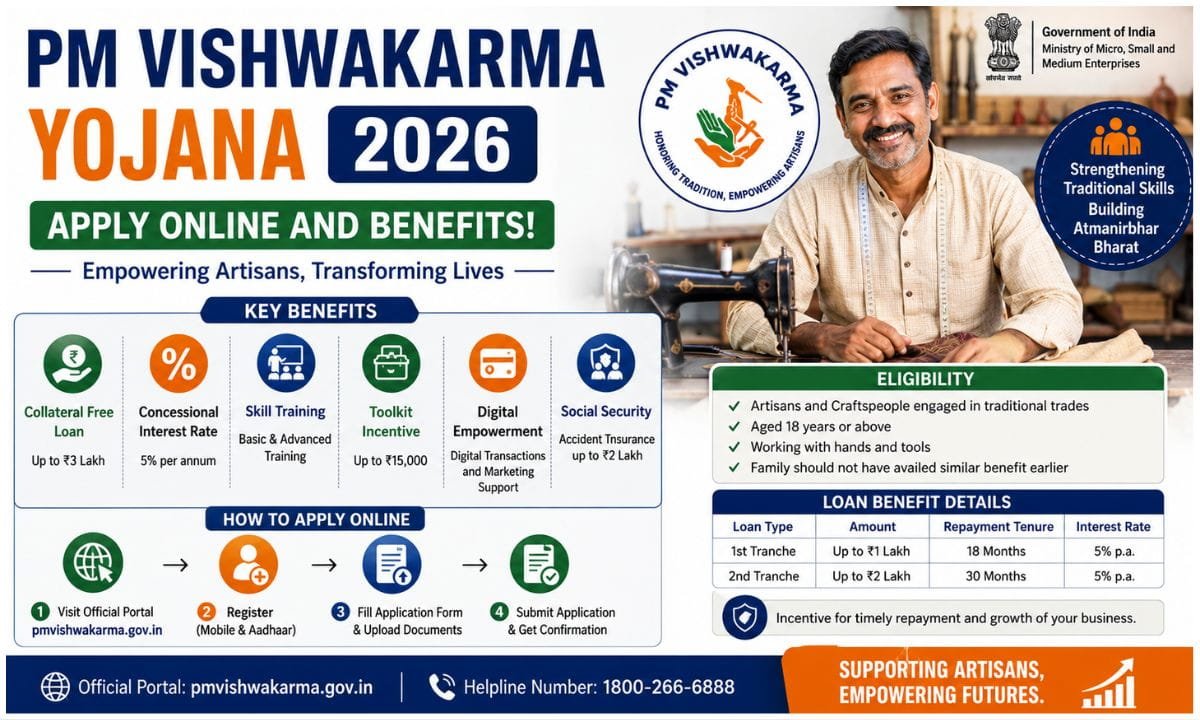
PM Vishwakarma Yojana 2026: India’s towns and villages have long depended on a quiet but essential workforce: the carpenters who build furniture, the blacksmiths who shape tools, the potters who craft everyday vessels, the tailors who stitch clothes, and dozens of other traditional artisans whose skills have been passed down through families for generations. For most of India’s economic history, this workforce operated almost entirely outside formal credit systems, without access to affordable loans, structured skill upgrades, or modern tools. The PM Vishwakarma Yojana was designed specifically to change that.
Launched by Prime Minister Narendra Modi on 17 September 2023, on the occasion of Vishwakarma Jayanti, the scheme is a Central Sector initiative run by the Ministry of Micro, Small and Medium Enterprises. It brings together recognition, skill training, financial assistance, and market support into a single, structured pathway for artisans and craftspeople working in eighteen traditional, family-based trades. The scheme was announced by the Prime Minister on Independence Day, 15 August 2023, and is planned to run for an initial five-year period, from 2023-24 through 2027-28, placing 2026 roughly at the scheme’s midpoint.
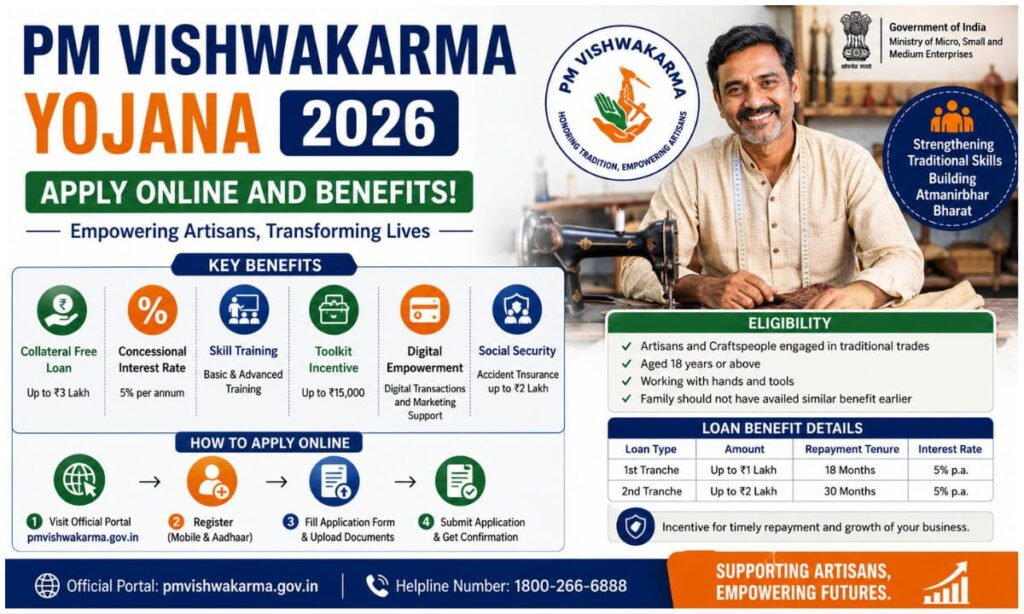
PM Vishwakarma Yojana 2026 – Origin
By late 2025, official figures indicated the scheme had already touched a significant number of lives, with government sources reporting that more than 30 lakh artisans across the country had benefited from it as of early October 2025. As the scheme moves through 2026, registration remains open, and this guide walks through everything an eligible artisan or craftsperson needs to know: what the scheme offers, who can apply, the documents required, the step-by-step online application process, and how the various components of financial and non-financial support actually work.
For decades, traditional artisans occupied an unusual position in India’s economy. Their skills were, and remain, genuinely valuable — the furniture, tools, jewellery, footwear, and everyday household items produced by these trades continue to be used across the country every single day. Yet the people producing them rarely had access to the kind of institutional support that formal small businesses take for granted: a bank willing to lend without collateral, a structured way to learn new techniques, or a certificate that establishes their professional identity beyond their immediate community.
Many relied instead on informal moneylenders charging steep interest, or simply reinvested whatever small surplus they could save, slowly, back into their trade. PM Vishwakarma Yojana 2026 was conceived as a direct response to this gap, treating artisans not as recipients of welfare but as small entrepreneurs who, given the right combination of recognition, training, tools, and credit, could meaningfully grow their income and the scale of their work.
It is also worth understanding how the scheme is administered. As a Central Sector Scheme, it is entirely funded by the Union government rather than being a centrally sponsored scheme that requires matching state contributions, and it is implemented under the overall coordination of the Ministry of Micro, Small and Medium Enterprises, working alongside state governments, Common Service Centres, and participating financial institutions. This structure allows the scheme to maintain relatively uniform rules and benefit amounts across states, even as the on-the-ground registration process runs through a decentralised network of service centres.
What Is PM Vishwakarma Yojana?
PM Vishwakarma Yojana, sometimes also referred to as the PM Vishwakarma Kaushal Samman Yojana, is a holistic support scheme aimed at artisans and craftspeople who work with their hands and simple tools in the unorganised sector, on a self-employment basis. Rather than offering a single benefit like a loan or a subsidy, the scheme is built as an end-to-end support system that combines several distinct components: formal recognition as a “Vishwakarma,” skill verification and training, a toolkit incentive to acquire modern equipment, access to collateral-free credit at concessional interest rates, incentives for adopting digital payments, and support for connecting with wider markets.
The name itself is drawn from Vishwakarma, the deity traditionally regarded in Indian mythology as the divine architect and craftsman. By naming the scheme after this figure and choosing to launch it around Vishwakarma Jayanti, the government has framed the initiative as an act of honouring and formalising the country’s traditional artisan communities, many of whom have historically lacked access to institutional credit or structured skill development.
The scheme currently covers eighteen family-based trades. These include carpenter, known locally as Suthar or Badhai, boat maker, armourer, blacksmith or Lohar, hammer and tool kit maker, locksmith, goldsmith or Sonar, potter or Kumhaar, sculptor including stone carvers and idol makers known as Moortikar, stone breaker, cobbler or shoesmith, sometimes referred to as Charmkar, mason or Rajmistri, basket, mat, broom maker and coir weaver, doll and toy maker working in the traditional style, barber or Naai, garland maker or Malakaar, washerman or Dhobi, tailor or Darzi, and fishing net maker. Anyone practising one of these eighteen trades as their primary occupation, on a self-employed basis, forms the intended beneficiary base of the scheme.
Objectives of the Scheme
The PM Vishwakarma Yojana 2026 was designed with several interlinked objectives in mind. The first is formal recognition: giving artisans and craftspeople an official identity as “Vishwakarma,” backed by a certificate and an identification card, so that their occupation and skill are acknowledged within a structured government framework rather than remaining entirely informal.
The second objective is skill enhancement. Many traditional artisans have deep, inherited expertise in their craft but have had limited exposure to modern techniques, tools, quality standards, or design trends that could help them earn more from the same skill. The scheme’s training component is meant to bridge this gap.
The third objective is financial inclusion. A large share of traditional artisans have historically operated outside the formal banking and credit system, often relying on informal moneylenders at high interest rates to fund raw materials or equipment. By offering collateral-free loans at a low, subsidised interest rate, the scheme aims to bring these workers into the formal credit fold.
The fourth objective is modernisation of tools and equipment, supported through the toolkit incentive, which allows artisans to purchase updated equipment that can improve both the quality and the speed of their work.
Finally, the PM Vishwakarma Yojana 2026 also aims to support inclusion of traditionally underrepresented groups. According to scheme documentation, the government has specifically sought to ensure participation from women and from communities that do not typically receive adequate support elsewhere, including people from Scheduled Castes, Scheduled Tribes, Other Backward Classes, persons with disabilities, transgender individuals, and residents of the North Eastern states, island territories, and hilly regions.
Key Benefits Under PM Vishwakarma Yojana 2026
The PM Vishwakarma Yojana 2026 benefits are structured across several distinct components, each addressing a different part of an artisan’s journey from informal worker to a recognised, better-equipped small enterprise operator.
Recognition Through Certificate and ID Card
Every artisan who successfully registers and is verified under the scheme receives a PM Vishwakarma Certificate and a PM Vishwakarma ID Card. A unique digital identification number is generated and reflected on both the certificate and the card. This recognition is not merely symbolic; it is the credential that establishes the applicant’s eligibility for every other benefit under the scheme, and it also gives artisans a form of formal identity that can be useful when dealing with buyers, marketplaces, or financial institutions outside the scheme itself. Both the certificate and ID card are made available to beneficiaries in digital as well as physical form.
Skill Training and Stipend
Before an applicant becomes eligible for credit support, the scheme requires skill verification, followed by Basic Training. This typically runs for five to seven days, amounting to around 40 hours of instruction, and covers both trade-specific skill upgrades and broader business-related knowledge. Artisans who wish to deepen their skills further can also opt for Advanced Training, an additional programme spanning around 15 days or roughly 120 hours.
During both the basic and advanced training phases, beneficiaries receive a stipend of 500 rupees per day, ensuring that the time spent in training does not come at the cost of lost daily income, which is often a major barrier preventing informal workers from taking time off for skill development.
Toolkit Incentive
To help artisans upgrade from traditional or worn-out tools to more modern equipment, the scheme provides a one-time toolkit incentive of up to 15,000 rupees. This amount is typically provided in the form of an e-voucher at the start of Basic Skill Training, and it is intended specifically for the purchase of tools relevant to the beneficiary’s registered trade. This component directly targets one of the most common constraints faced by small artisans: the inability to afford better equipment that could improve the quality, consistency, or speed of their output.
Collateral-Free Credit Support
Perhaps the most significant financial benefit under the scheme is access to collateral-free “Enterprise Development Loans.” These are disbursed in two tranches rather than as a single lump sum. The first tranche offers up to 1 lakh rupees, with a repayment tenure of 18 months. Once a beneficiary has successfully utilised and begun repaying the first tranche, they become eligible for a second tranche of up to 2 lakh rupees, carrying a longer repayment tenure of 30 months. Together, these two tranches can provide beneficiaries with collateral-free credit support of up to 3 lakh rupees over the course of their participation in the scheme.
Both tranches are made available at a concessional interest rate. Beneficiaries are charged an interest rate of around 5 percent, considerably lower than typical market rates for unsecured small loans, while the government provides an interest subvention of up to 8 percent to the lending institution, effectively absorbing much of the true cost of the loan on the beneficiary’s behalf. In addition, the credit guarantee fee associated with these loans is covered by the Government of India, which is what allows the loans to be offered without requiring collateral or a third-party guarantee from the borrower.
Eligible lending institutions participating in the scheme include scheduled commercial banks, regional rural banks, cooperative banks, non-banking financial companies, and microfinance institutions. It is worth noting that eligibility for the first tranche of credit support is typically linked to completion of the Basic Training component, meaning artisans generally need to complete skill verification and basic training before they can access the initial 1 lakh rupee tranche.
Also notable is that there is no prepayment penalty if a beneficiary chooses to repay the loan early, provided repayment happens after a minimum of six months from disbursement, giving borrowers some flexibility in managing their obligations without being penalised for repaying ahead of schedule.
Digital Transaction Incentive
Recognising the broader push toward digital payments in India’s economy, the scheme also incentivises beneficiaries to adopt digital transactions in their day-to-day business. Under this component, artisans receive an incentive of 1 rupee per digital transaction, capped at 100 transactions per month. While modest in absolute terms, this incentive is designed to nudge traditional artisans toward digital payment adoption, which can, over time, also help build a more visible financial and transaction history that could support future access to formal credit.
Market Linkage Support
Beyond training and credit, the scheme also focuses on helping artisans connect with wider markets for their products and services. This includes support for participation in exhibitions, linkage with e-commerce platforms, branding assistance, and other market access initiatives intended to help beneficiaries sell their goods beyond their immediate local customer base. For many traditional artisans whose businesses have historically been limited to local, word-of-mouth customers, this component can open up meaningfully larger markets.
No Enrolment Charges
An important point for prospective applicants is that there is no cost to enrol in the scheme. The entire enrolment process, including registration support at Common Service Centres and the issuance of the certificate and ID card, is covered by the government, and applicants should not be asked to pay any fee for registration, certificate issuance, or ID card generation. Any request for payment during the registration process from an unofficial source should be treated as a red flag.
PM Vishwakarma Yojana 2026 – Eligibility Criteria
The eligibility framework for PM Vishwakarma Yojana 2026 is fairly specific and is worth reviewing carefully before beginning an application.
- The applicant must be an artisan or craftsperson engaged in self-employment in the unorganised sector, working with their hands and tools rather than through mechanised or factory-based production. The applicant’s trade must be one of the eighteen family-based traditional trades formally recognised under the scheme; occupations outside this list, even if broadly related to craft or manual skill work, are not covered.
- The applicant must be at least 18 years of age at the time of registration. There is generally no stated upper age limit, though applicants should confirm current guidance on the official portal, since scheme parameters can be periodically updated.
- The applicant must be actively engaged in the relevant trade at the time of registration, meaning the PM Vishwakarma Yojana 2026 is intended for practising artisans rather than individuals who have skills in a trade but are not currently working in it.
- A significant restriction concerns prior participation in other government credit-linked self-employment schemes. Applicants should not have availed benefits under similar schemes, such as the Prime Minister’s Employment Generation Programme, PM SVANidhi, or the Mudra loan scheme, within the five years preceding their PM Vishwakarma application. This restriction is intended to ensure the scheme’s limited resources reach artisans who have not already received comparable government-backed credit support recently.
- Only one member of a family, defined for this purpose as the applicant, their spouse, and their unmarried children, is permitted to register and avail benefits under the PM Vishwakarma Yojana 2026. This means households cannot register multiple family members separately to access multiple sets of benefits.
- Government employees and their family members are explicitly excluded from eligibility under the PM Vishwakarma Yojana 2026, since the scheme is targeted at informal-sector artisans rather than those already in formal government employment.
Documents Required for PM Vishwakarma Yojana 2026 Registration
Applicants should have the following documents ready before beginning the PM Vishwakarma Yojana 2026 registration process. An Aadhaar card is required as the primary identity document and is also used for e-KYC verification during registration. A mobile number linked to Aadhaar is needed for OTP-based verification during the PM Vishwakarma Yojana application process.
Applicants will also need to provide bank account details, since all financial benefits under the scheme, including the toolkit incentive, training stipend, and loan disbursements, are transferred directly through Direct Benefit Transfer into the applicant’s linked bank account. A PAN card is generally required as well, particularly at the stage of loan application. A passport-size photograph is needed for the application form and for generation of the ID card.
Depending on the applicant’s specific trade and local requirements, some form of occupation or trade proof may also be requested during verification, though for many applicants this is established through the registration and verification process itself rather than a separate document.
How to Apply for PM Vishwakarma Yojana 2026 Online?
Unlike many government schemes that allow direct self-service online registration from any personal device, PM Vishwakarma Yojana registration is structured to run primarily through Common Service Centres, commonly known as CSCs, which are digital service delivery points set up across the country, particularly in rural and semi-urban areas.
Applicants typically cannot register directly on the portal on their own; instead, PM Vishwakarma Yojana 2026 is completed with the assistance of a CSC operator, after which applicants can use their credentials to log in independently and track their PM Vishwakarma Yojana application.
The general step-by-step process works as follows.
- Step one is locating a nearby Common Service Centre. Since registration itself happens at a CSC rather than through pure self-service, it is worth calling ahead to confirm that a particular centre handles PM Vishwakarma registrations specifically, and to check exactly which documents to bring, rather than arriving unprepared.
- Step two involves visiting the CSC with the required documents, including Aadhaar card, mobile number, bank account details, PAN card, and a passport-size photograph. The CSC operator will access the official PM Vishwakarma portal, found at pmvishwakarma.gov.in, on the applicant’s behalf.
- Step three is Aadhaar-based e-KYC verification, combined with mobile OTP verification, to confirm the applicant’s identity within the system.
- Step four involves entering personal details, including name, address, family information, and selecting the specific trade from the list of eighteen recognised trades. This trade selection is important, since it determines the specific skill verification and training track the applicant will be assigned to.
- Step five is uploading the required documents in the prescribed format and file size, including Aadhaar, PAN, bank details, and the applicant’s photograph, along with any occupation-related information requested during the process.
- Step six allows the applicant to indicate their preferences regarding skill training, choosing between Basic and Advanced training tracks, and to express interest in the toolkit incentive and loan assistance components, which will become relevant at later stages of the process.
- Step seven is a careful review of all details entered before final submission, since errors in personal, bank, or trade details can cause delays in verification or benefit disbursement later.
Once submitted, the applicant receives a Registration ID or Application Number, which should be retained carefully, since it is used for tracking application status going forward.
Following submission, the PM Vishwakarma Yojana 2026 application passes through what is generally described as a multi-stage verification process, typically involving verification at the local or Gram Panchayat and Urban Local Body level, followed by verification at the district level. Once verification is complete and the applicant is confirmed as eligible, the PM Vishwakarma Certificate and ID Card are issued, after which the applicant becomes eligible to proceed with skill verification, training, the toolkit incentive, and subsequently, loan applications.
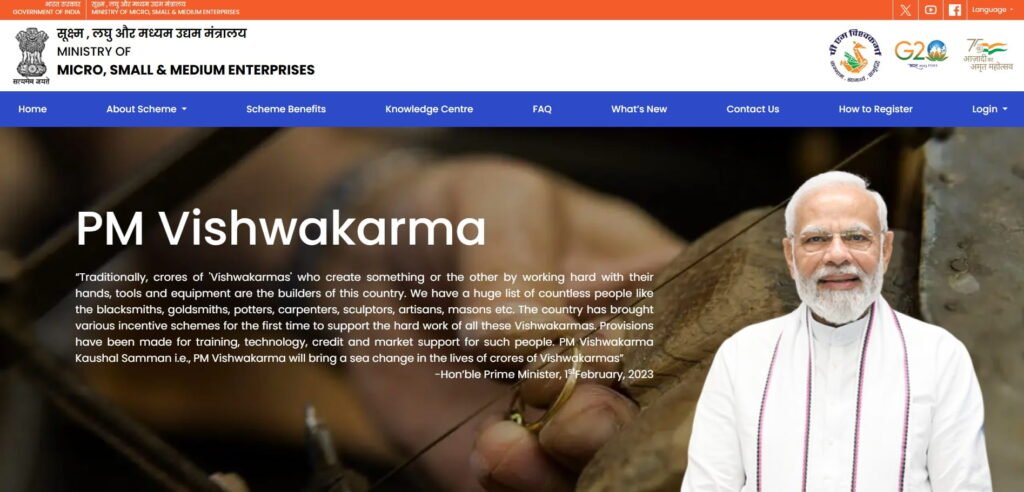
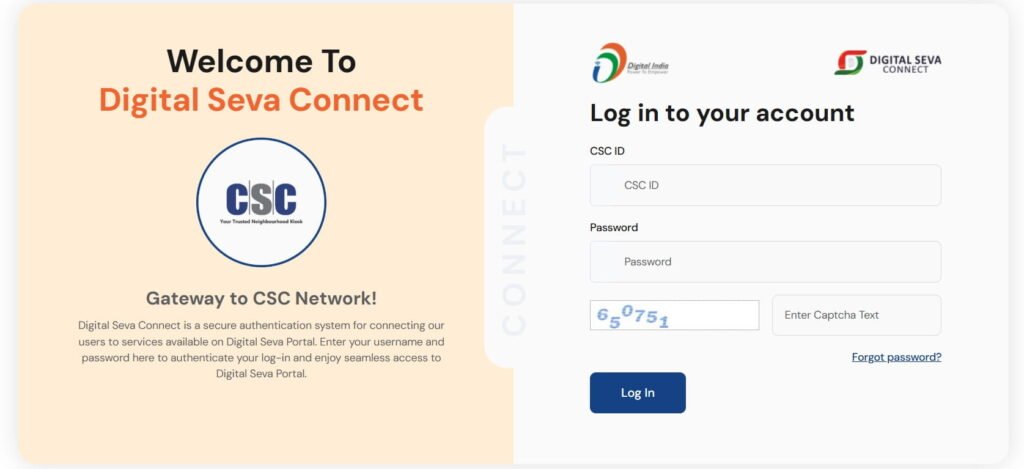
For applicants who wish to check their application status or access their account after initial registration, the portal provides a beneficiary login option, along with a separate login for CSC operators who assist with the registration process.
Checking PM Vishwakarma Yojana Application Status
After PM Vishwakarma Yojana 2026 registration, applicants can check their PM Vishwakarma Yojana 2026 application status through the beneficiary login section of the official portal, using their registered mobile number and any credentials provided at the time of registration. This allows applicants to track progress through the verification stages, confirm whether their certificate and ID card have been issued, and check the status of any toolkit or loan applications submitted subsequently.
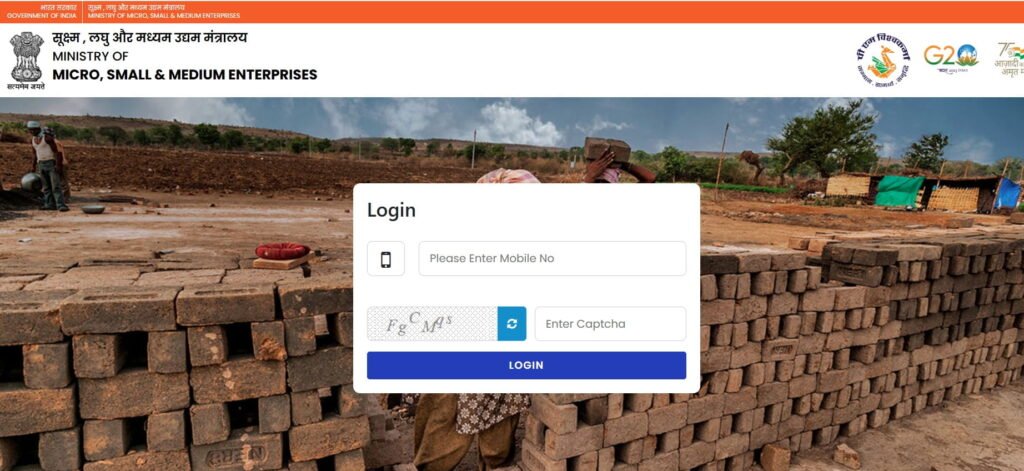
Given that scam websites and unofficial intermediaries sometimes attempt to mimic government scheme portals, applicants should take care to use only the official portal address and should be wary of any third party asking for payment in exchange for registration, application status checks, or expedited processing, since the government has been explicit that no such fees apply to the genuine scheme.
How PM Vishwakarma Yojana Fits Into India’s Broader MSME and Skilling Ecosystem?
PM Vishwakarma Yojana sits alongside several other government initiatives aimed at India’s informal and micro-enterprise sector, including schemes like PM SVANidhi for street vendors, the Prime Minister’s Employment Generation Programme for new micro-enterprises, and Mudra loans for small business credit more broadly. What distinguishes PM Vishwakarma Yojana is its specific, narrow focus on eighteen traditional, hereditary trades, combined with a structured sequence that moves an artisan from recognition, through skill verification and training, into toolkit support, and finally into staged access to formal credit.
This design reflects an understanding that many artisans in these trades do not simply need a loan; they often also need formal recognition of their skill, an opportunity to upgrade that skill against modern standards, and better tools, before credit alone can meaningfully improve their earning capacity. By sequencing these components together rather than offering credit in isolation, the scheme aims to address several interlinked barriers at once, rather than treating access to finance as a stand-alone solution.
For India’s traditional artisan communities, many of whom have operated for generations without formal institutional support, PM Vishwakarma Yojana represents a structured attempt to formalise, strengthen, and modernise livelihoods that remain economically and culturally significant, particularly across small towns, villages, and peri-urban clusters where these eighteen trades continue to sustain a meaningful share of local livelihoods.
Conclusion
PM Vishwakarma Yojana continues to be one of the more comprehensive support schemes available to India’s traditional artisans and craftspeople as the scheme moves through 2026, roughly midway through its planned five-year run from 2023-24 to 2027-28. By combining formal recognition, skill verification and training with a daily stipend, a toolkit incentive of up to 15,000 rupees, collateral-free credit of up to 3 lakh rupees across two staged tranches at a concessional interest rate, incentives for digital transactions, and market linkage support, the scheme attempts to address multiple, interlinked barriers that have historically limited the growth of India’s informal artisan economy.
For eligible artisans working in one of the eighteen recognised trades, the most practical next step is to visit a nearby Common Service Centre with the required documents, Aadhaar card, mobile number, PAN card, bank details, and a photograph, to begin the registration process. Given that scheme parameters, benefit amounts, and procedural details can be periodically revised, applicants are encouraged to confirm the latest requirements directly through the official portal at pmvishwakarma.gov.in or with their local Common Service Centre before beginning their application, and to remain cautious of any unofficial source requesting payment for what is, by design, a free government registration process.
For families and communities where these traditional trades are practised, it is also worth thinking about the scheme not as a one-time transaction but as a multi-year pathway. The sequence built into the scheme, moving from recognition, to skill verification and training, to toolkit support, and finally to staged access to larger amounts of credit, generally rewards patience and consistent follow-through. An artisan who completes Basic Training, uses the toolkit incentive as intended, and repays the first loan tranche responsibly is far better positioned to access the second, larger tranche than one who tries to skip ahead in the process. In that sense, the scheme functions as much as a credit-building and skill-building relationship as it does a one-off grant.
It is also sensible for prospective applicants to have a rough plan for how they intend to use each component of support before they begin. Thinking in advance about which specific tools the toolkit incentive should go toward, whether Basic Training alone is sufficient or whether the Advanced Training track would be more valuable for a particular trade, and what the enterprise loan would realistically be used for, whether raw materials, equipment, or working capital, can help artisans get more durable value out of the scheme rather than treating each benefit as an isolated windfall.
Finally, because PM Vishwakarma Yojana 2026 is still an active, evolving scheme roughly midway through its planned five-year run, artisans who are unsure whether they qualify, or who face difficulties during registration or verification, should not hesitate to seek help directly from their nearest Common Service Centre or from local Ministry of MSME outreach channels, rather than relying solely on informal advice or unofficial websites. Given how many similarly named unofficial portals and informational sites exist alongside the genuine government scheme, verifying details directly at the source remains the safest way to make full and correct use of the benefits on offer.
Official Sources
| PM Vishwakarma Yojana 2026 Apply Online | CLICK HERE |
| MSME PORTAL | CLICK HERE |
Common Questions and Practical Considerations
Who is eligible for the PM Vishwakarma Yojana 2026?
Traditional artisans and craftspeople aged 18 years or older, who work in any of the specified trades and meet the scheme’s eligibility criteria, can apply for PM Vishwakarma Yojana 2026.
What is the maximum loan amount available under PM Vishwakarma Yojana 2026?
Eligible beneficiaries can avail of collateral-free loans of up to ₹3 lakh in two tranches—₹1 lakh initially and ₹2 lakh subsequently—at a concessional interest rate.
Is any training provided?
Yes. The scheme offers basic and advanced skill training, along with a daily stipend of ₹500 during the training period.
Can I apply online without visiting a CSC?
Registration is typically completed through Common Service Centres (CSCs) using Aadhaar authentication and e-KYC.
Is there a deadline for applying for PM Vishwakarma Yojana in 2026?
There is no specific deadline for registration in 2026. The scheme remains open until the government announces any changes.
Which trades are covered under PM Vishwakarma Yojana 2026?
The scheme covers 18 traditional trades, including carpenters, blacksmiths, potters, tailors, goldsmiths, barbers, cobblers, masons, washermen, and several others.