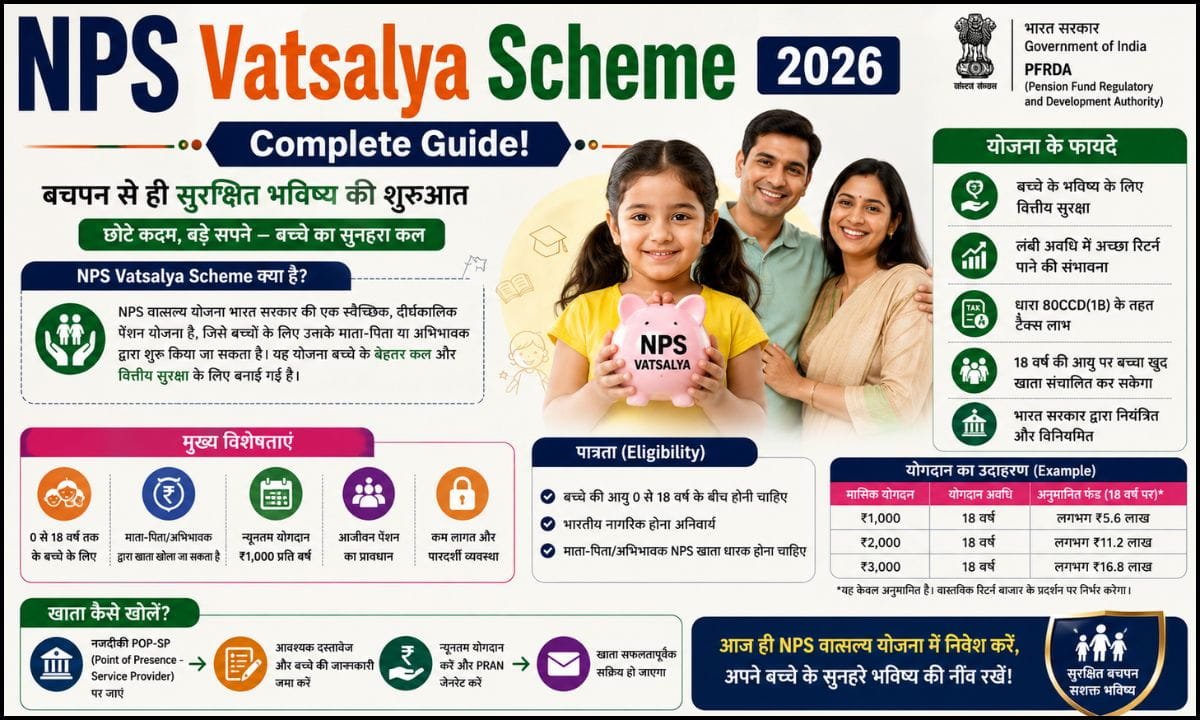
NPS Vatsalya Scheme 2026: Planning for a child’s future has traditionally meant choosing between fixed deposits, savings certificates, insurance-linked child plans, or gold. In September 2024, the Government of India introduced a new option that changes this conversation entirely: NPS Vatsalya. Regulated by the Pension Fund Regulatory and Development Authority (PFRDA), NPS Vatsalya extends the well-established National Pension System (NPS) framework to minors, allowing parents and legal guardians to start building a retirement corpus for their children from the earliest possible age. The word “Vatsalya” is drawn from Sanskrit and reflects the idea of parental affection and care. True to its name, the scheme is built around the philosophy that the most powerful financial gift a parent can give a child is time. By starting contributions when a child is a few months or a few years old, families can harness decades of compounding growth long before the child even understands what a pension account is.
Since its launch, the schNPS Vatsalya Scheme me has evolved through multiple rounds of regulatory refinement. The most significant of these came with the NPS Vatsalya Scheme Guidelines, issued by PFRDA on 7 January 2026, which came into full effect from 23 February 2026. These guidelines introduced clearer rules on withdrawals, exits, asset allocation, and data sharing, along with an important update allowing guardians far greater control over how the money is invested. This guide walks through everything a parent or guardian needs to know about NPS Vatsalya Scheme 2026 — what it is, how it works, its tax treatment, investment options, withdrawal rules, and how it compares with other child-focused savings instruments.
What Is NPS Vatsalya Scheme?
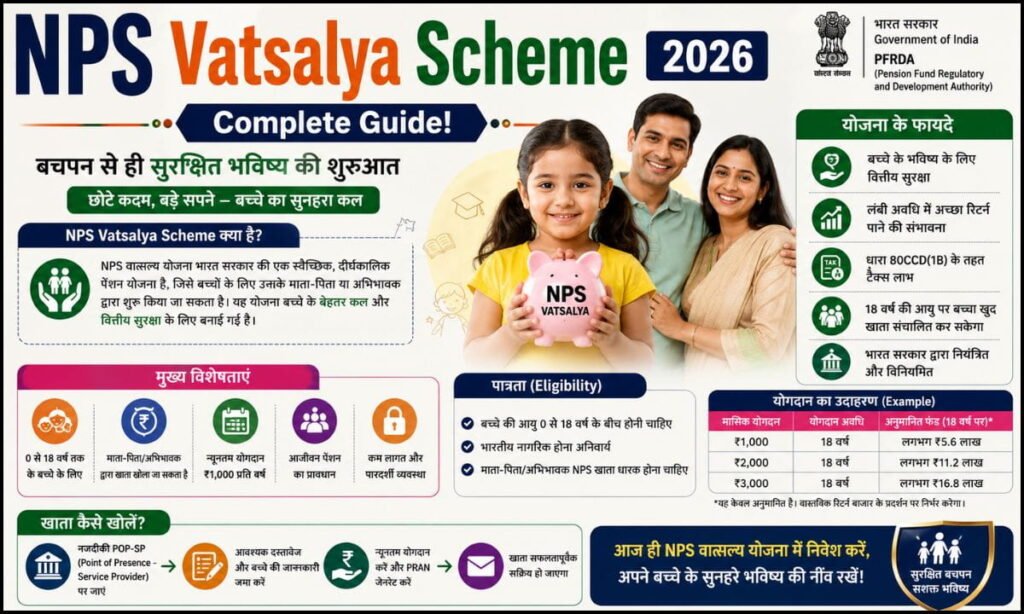
NPS Vatsalya Scheme is a pension and long-term savings scheme for children below the age of 18, operated under the broader National Pension System. Finance Minister Nirmala Sitharaman first announced the scheme during the Union Budget 2024-25, and it was formally launched on 18 September 2024 in New Delhi. Unlike a regular NPS account, which an adult opens and manages for their own retirement, an NPS Vatsalya account is opened by a parent or legal guardian in the name of a minor child. The guardian operates the account and makes contributions on the child’s behalf until the child turns 18.
At its core, the scheme functions as a Tier-1 style pension account. Contributions are invested in market-linked instruments through professional pension fund managers, and the corpus grows over the years through a combination of contributions and investment returns. When the child turns 18, the account does not close or mature in the way a fixed-term savings scheme would. Instead, it converts seamlessly into a standard NPS account, which the now-adult individual can continue to operate independently for the rest of their working life, right up to their own retirement.
This design has an important implication: NPS Vatsalya Scheme is not simply a child education fund or a marriage fund, even though partial withdrawals for such purposes are permitted. Its primary orientation is long-term retirement planning that begins in childhood, giving the underlying investment corpus an exceptionally long runway — potentially 50 to 60 years — to benefit from compounding.
Key Features of the NPS Vatsalya Scheme
Every NPS Vatsalya account is issued a unique Permanent Retirement Account Number, or PRAN, by the Central Recordkeeping Agency (CRA), in the name of the minor. This PRAN stays with the individual for life, even after the account converts into a regular NPS account at adulthood. The NPS Vatsalya Scheme account can be opened by a parent, a legal guardian, or in certain cases a person appointed under legal guardianship provisions, for any child from birth up to the age of 18. There is no minimum age to start; some families open accounts for infants only a few months old, precisely to maximize the compounding period.
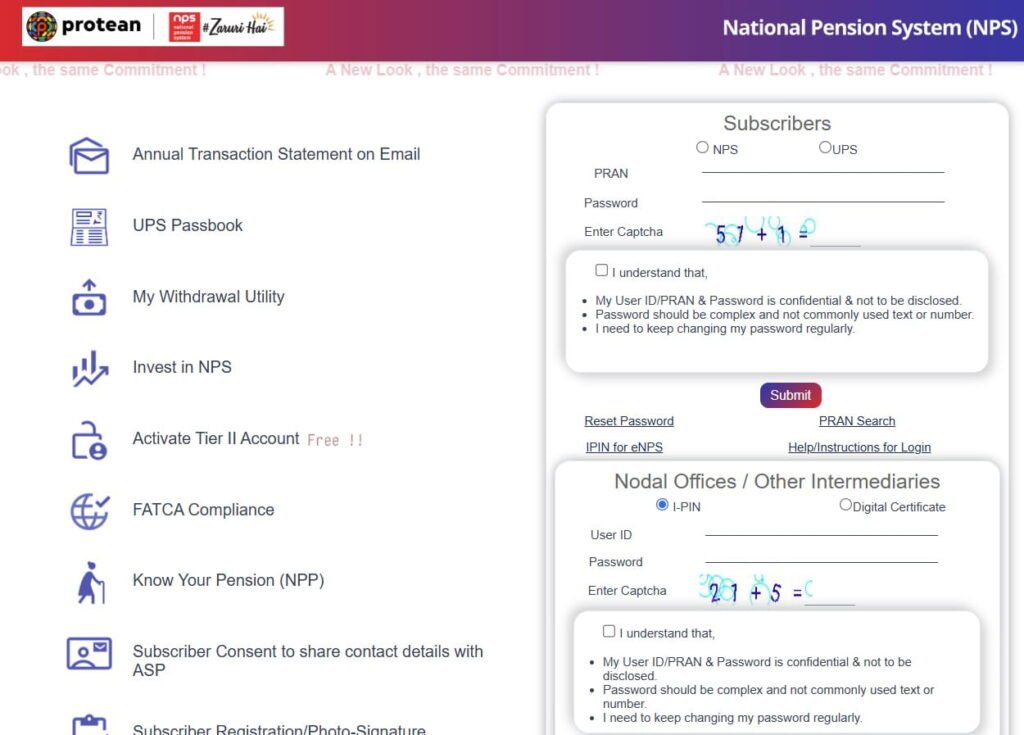
The minimum initial contribution required to open an account is generally around 1,000 rupees, and the minimum annual contribution to keep the account active is also set at a similarly modest level. There is no upper ceiling on how much can be contributed in a year, giving families the flexibility to invest more during years of higher income and scale back when needed. Contributions can be made by the guardian, and in many cases by other family members as well, through the eNPS portal, the Protean (formerly NSDL) platform, or through KFintech, as well as through participating banks, post offices, and registered points of presence.
As the child grows and eventually turns 18, a fresh Know Your Customer (KYC) verification is required. This must be completed within three months of the child attaining majority. Once this fresh KYC is done, the account converts into a standard NPS Tier-1 account, and the individual — no longer a minor — can operate it independently, choose their own fund manager, and continue contributing toward their own retirement.
Why the NPS Vatsalya Scheme Matters in 2026?
Two developments make 2026 a particularly relevant year to understand NPS Vatsalya closely.
First, PFRDA issued the NPS Vatsalya Scheme Guidelines 2025 on 7 January 2026, which consolidated and clarified rules that had previously existed in a more fragmented form. Under these updated guidelines, investors can allocate up to 75 percent of funds to equities, while partial withdrawals are allowed for education or medical needs, with clear rules laid down for exit and continuation once the minor attains majority. These guidelines were issued in supersession of the original September 2024 circular and were designed to give both guardians and pension fund managers a much clearer operational framework.
Second, and arguably more significant for long-term investors, PFRDA introduced an “Active Choice” investment option that goes even further than the 75 percent equity cap mentioned above. According to reporting on the 2026 update, the update allows guardians to decide the asset mix, selecting up to 75 percent or even 100 percent equity depending on their risk appetite, with Pension Fund Managers now permitted to design aggressive investment strategies that were previously restricted, allowing funds to invest fully in equity to maximize compounding for children. This is a meaningful shift, because it lets families with a high risk tolerance and a genuinely long investment horizon — often 15 or more years until the child needs the money, and 40 or more years until eventual retirement — capture more of the long-term growth that equities have historically offered compared to debt instruments.
Alongside these investment changes, the 2026 guidelines also introduced a new data-sharing protocol. Central Recordkeeping Agencies will now share subscriber insights with Pension Funds to provide more personalized communication and better geographical tracking, a move aimed at increasing awareness in rural and semi-urban areas through Anganwadi and ASHA worker networks. For urban families, the digital onboarding experience has also been streamlined, with the e-Sign facility upgraded to make the digital onboarding process faster in 2026.
Together, these changes reflect a scheme that is still being actively refined less than two years after launch, with the regulator responding to early feedback about flexibility, transparency, and accessibility.
Who Can Open an NPS Vatsalya Account?
Eligibility for NPS Vatsalya Scheme is straightforward. Any Indian citizen who is a minor, from birth until the day before their eighteenth birthday, is eligible to have an account opened in their name. The account itself must be opened and operated by a parent or a legal guardian; the child, being a minor, cannot open or operate it directly. Guardianship here can include a biological parent, an adoptive parent, or a court-appointed legal guardian. In cases involving a child without living parents, a legal guardian appointed under applicable law can open and manage the account on the child’s behalf.
Non-resident Indian families with children who are Indian citizens are also generally permitted to open accounts, subject to the standard NPS documentation and compliance requirements applicable to NRIs, though it is worth verifying current status through the official portals given that NRI-specific provisions can be updated periodically.
Documents Required to Open an NPS Vatsalya Scheme Account
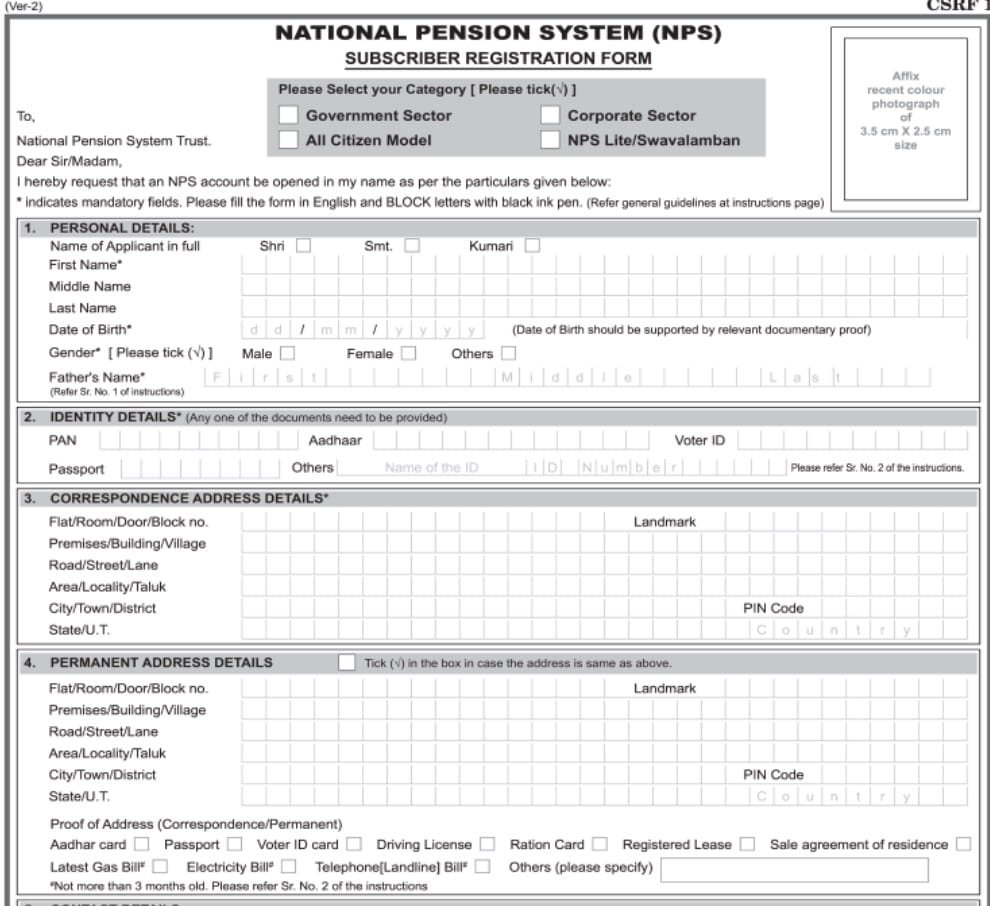
Opening an NPS Vatsalya Scheme account requires documentation for both the guardian and the minor. On the guardian’s side, this typically includes proof of identity such as a PAN card or Aadhaar card, proof of address, and a passport-size photograph. The guardian must also complete their own KYC verification, which can usually be done digitally through Aadhaar-based e-KYC or DigiLocker.
For the minor, the primary document required for NPS Vatsalya Scheme account is a birth certificate or another valid proof of date of birth, since age verification is central to the scheme’s eligibility rules. In cases involving legal guardianship rather than biological parentage, additional documentation establishing the legal guardian relationship is required, such as a court order or a legally recognized guardianship certificate.
A bank account in the name of the guardian, linked to the NPS Vatsalya account for contributions and any eventual withdrawals, is also a standard requirement.
How to Open an NPS Vatsalya Scheme Account: Step by Step?
The NPS Vatsalya Scheme account opening process has largely moved online, making it accessible to families across the country without needing to visit a physical branch, although offline opening through banks, post offices, and points of presence remains available for those who prefer it.
The typical NPS Vatsalya Scheme online process begins with visiting the official eNPS portal operated by Protean, or alternatively the KFintech portal, both of which have been authorized to facilitate NPS Vatsalya registrations. On the portal, the guardian selects the NPS Vatsalya registration option and proceeds to complete their own KYC, which can be done using Aadhaar-based OTP verification or through DigiLocker integration, both of which are designed to minimize paperwork.
Once the guardian’s identity is verified, the guardian enters the minor’s details, including full name, date of birth, and the required proof of birth documentation. The system then generates a unique PRAN for the child. The guardian designates a bank account and completes an initial contribution to activate the account. According to recent reporting on the 2026 process, the minimum initial payment required to activate the account is around 250 rupees.
It is worth noting that different sources cite slightly different minimum contribution figures — some references point to a 1,000 rupee minimum annual contribution — so guardians should confirm the exact current minimum directly on the official portal before initiating payment, since such operational details can be revised by the regulator from time to time. After the initial contribution, the guardian receives account credentials and can begin making regular or periodic contributions, track the account’s performance, and, under the newer Active Choice framework, select the desired asset allocation mix for the child’s investments.
Families who run into difficulty with the online process, or who prefer in-person assistance, can approach any registered Point of Presence, which includes many public and private sector banks, post offices, and other PFRDA-authorized intermediaries, to open the account offline with physical documentation.
Investment Options and Asset Allocation
One of the more technical, but also more consequential, aspects of NPS Vatsalya concerns how the contributed money is actually invested. Like the regular NPS, Vatsalya accounts are invested across a mix of asset classes, broadly categorized as equity, corporate debt, government securities, and alternative assets, with professional pension fund managers responsible for managing the underlying portfolios.
Historically, NPS Vatsalya followed a more conservative default allocation, similar in spirit to the “Auto Choice” lifecycle funds available under regular NPS, where equity exposure is capped and gradually reduced as the subscriber ages. However, the 2025 guidelines and the subsequent 2026 update substantially expanded the flexibility available to guardians.
Under the framework described in early 2026 reporting, guardians using the standard flexible option can allocate up to 75 percent of funds to equities, while under the newer Active Choice option introduced later, guardians can select up to 100 percent equity exposure depending on their risk appetite, with fund managers now permitted to run more aggressive strategies that were previously restricted.
This shift matters because equities have historically delivered stronger long-term returns than debt instruments, particularly over holding periods measured in decades rather than years. For a family opening an account when a child is an infant, the effective investment horizon before any need for withdrawal may span 15 to 18 years, and the horizon before the underlying pension corpus is actually needed for the individual’s own retirement could stretch to 50 or 60 years. Over such timeframes, higher equity allocation has generally been associated with materially higher compounded outcomes, though of course with correspondingly higher short-term volatility.
For families more comfortable with a moderate risk profile, NPS Vatsalya Scheme continues to offer a mix of government securities and corporate debt options, allowing a more balanced or conservative approach. As with any market-linked product, the actual returns will vary depending on which asset classes are chosen, which fund manager is selected, and how markets perform over the holding period.
NPS Vatsalya Scheme – Returns and Interest Rate
Unlike fixed-return government schemes such as the Public Provident Fund or Sukanya Samriddhi Yojana, NPS Vatsalya Scheme does not offer a guaranteed interest rate. Returns are entirely market-linked, based on the performance of the underlying equity, debt, and government securities in which the corpus is invested.
That said, industry estimates and historical data offer some sense of what returns might look like. Current market commentary suggests the NPS Vatsalya Scheme blended interest rate has ranged roughly between 9.5 percent and 10 percent in recent periods, though this is not a promised or fixed figure and will fluctuate with market conditions. Looking at historical NPS performance by asset class more broadly, equity allocations under NPS have historically delivered returns in the range of roughly 12 to 14 percent CAGR, government securities around 8 to 9 percent, and corporate debt around 7 to 8 percent, though past performance offers no guarantee of future results and actual outcomes will depend on fund choice and prevailing market conditions.
Prospective investors should treat any quoted return figure as indicative rather than assured, and should check the relevant CRA portal periodically for updated benchmark performance of the specific pension fund manager and scheme they have selected.
Tax Benefits Under NPS Vatsalya
Tax treatment is one of the more attractive aspects of the scheme, and it has also been an area of active clarification over the past year. Initially, there was some ambiguity around whether contributions made to a minor’s NPS Vatsalya account would enjoy the same tax deductions available under regular NPS. This was resolved through the Union Budget 2025, which extended the relevant deductions explicitly to NPS Vatsalya Scheme.
Under the current framework, contributions made by a guardian to a child’s NPS Vatsalya account are eligible for the same broad tax treatment available under regular NPS. This includes deduction under Section 80C of the Income Tax Act, within the overall composite limit of 1.5 lakh rupees available under that section for various eligible investments. In addition, contributions are eligible for an extra deduction under Section 80CCD(1B), which allows guardians to claim an additional deduction of up to 50,000 rupees per financial year, over and above the standard 1.5 lakh rupee limit available under Section 80C.
A particularly notable clarification from Budget 2025 concerns the applicability of this additional deduction across both tax regimes. The government clarified that the 50,000 rupee additional deduction under Section 80CCD(1B) is applicable under both the old and new tax regimes, making the scheme accessible to a broader base of taxpayers regardless of which regime they have opted into. This is significant because many deductions available under the old tax regime are not available to taxpayers who have opted for the simplified new regime, but this particular NPS Vatsalya-linked benefit has been designed to work across both.
It is worth noting the effective date of this tax treatment. The tax benefits for NPS Vatsalya are effective from 1 April 2026, applicable from the assessment year 2026-27 onward, meaning that guardians should factor in this timeline when planning contributions for the relevant financial year and consult their tax advisor or the latest Income Tax Department guidance to confirm treatment for any contributions made before that effective date.
Beyond the deduction on contributions, the invested corpus itself grows in a tax-efficient manner. Investments within the account grow tax-free until withdrawal, which supports long-term wealth creation for a child’s future needs. This tax-deferred compounding, combined with the deduction benefits on the contribution side, makes NPS Vatsalya one of the more tax-efficient long-term savings vehicles currently available for children in India, though families should always verify current provisions with a qualified tax professional, since tax law and its interpretation can change.
NPS Vatsalya Scheme – Withdrawal Rules and Exit Options
A common concern parents have with long-term pension-style products is liquidity — what happens if the family needs the money before the child turns 18, or before the eventual retirement-linked maturity of the account. NPS Vatsalya has been designed with specific, limited flexibility to address this concern, while still preserving the scheme’s core long-term orientation.
Partial withdrawals are permitted, but only for specific, defined purposes. Partial withdrawals are allowed for education or medical needs, with clear rules laid down for how much can be withdrawn and under what conditions. According to the detailed tax and benefits framework, up to 25 percent of the guardian’s own contributions, as opposed to the full accumulated corpus including returns, can be withdrawn for specific purposes such as education or serious illness, without triggering additional tax implications. This partial withdrawal facility typically comes with conditions, such as a minimum period the account must have been active before a withdrawal request can be made, and limits on how many times such a withdrawal can be made over the life of the account before the child turns 18.
When it comes to what happens at the point the child turns 18, or in other exit scenarios, the rules are more layered. Upon exit, subscribers can take up to 80 percent of the accumulated corpus as a lump sum, with the remainder required to be invested in an annuity plan purchased from an approved Annuity Service Provider. However, if the total accumulated corpus is less than 8 lakh rupees at the time of exit, the entire amount may be withdrawn as a lump sum without the mandatory annuitization requirement.
In practice, for most families, the “exit” at age 18 will not actually mean withdrawing the money at all. Instead, the standard and expected pathway is continuation: the account converts into a regular adult NPS account after the now-adult individual completes a fresh KYC within three months of turning 18, and the corpus continues to grow, uninterrupted, toward the individual’s own eventual retirement. Full withdrawal or premature exit before age 18 is generally restricted to exceptional circumstances, such as the unfortunate death of the minor account holder, in which case the accumulated corpus is paid out to the nominee or guardian as per the applicable rules.
What Happens When the Child Turns 18?
The transition from a minor’s Vatsalya account to a standard adult NPS account is one of the scheme’s defining design features, and it is worth understanding in some detail.
- As the child approaches the age of 18, the guardian and eventually the young adult themselves will need to complete a fresh KYC process. This must be done within three months of the individual attaining majority. This fresh verification is necessary because, up to that point, the account has been operated entirely by the guardian using the guardian’s own KYC credentials layered onto the minor’s PRAN; once the individual becomes a legal adult, they need to be independently verified as the account holder in their own right.
- Once this fresh KYC is completed, the account is converted from an NPS Vatsalya account into a regular NPS Tier-1 account. At this point, the individual gains full control: they can choose their own pension fund manager, decide on their asset allocation going forward, make their own contributions, and manage the account exactly as any adult NPS subscriber would, right through to their eventual retirement, which for most subscribers is age 60, with options to extend up to age 75.
- Crucially, the PRAN issued when the account was first opened in childhood remains the same PRAN throughout the individual’s life. This means the entire contribution and growth history from childhood carries forward seamlessly, and the individual does not lose the years of compounding that occurred while they were a minor. This continuity is precisely what gives NPS Vatsalya its distinctive long-horizon advantage over child plans that mature and pay out at 18 or 21, requiring the proceeds to then be reinvested from scratch.
NPS Vatsalya Compared with Other Child Savings Options
Families evaluating NPS Vatsalya Scheme often want to know how it stacks up against more familiar options such as the Sukanya Samriddhi Yojana, the Public Provident Fund, or traditional child insurance plans.
Sukanya Samriddhi Yojana is a government-backed scheme exclusively for girl children, offering a fixed, government-declared interest rate, currently among the more attractive rates in the small savings category, along with tax-free maturity proceeds under Section 80C. It has a defined maturity structure tied to the girl’s marriage or education needs and closes at a set point rather than converting into a lifelong account. NPS Vatsalya, by contrast, is open to both boys and girls, is market-linked rather than fixed-return, and is explicitly designed to continue into adult retirement planning rather than closing out in the child’s late teens or early twenties.
The Public Provident Fund is a fixed-return, government-backed long-term savings instrument with a 15-year lock-in that can technically be opened in a minor’s name by a guardian, and offers guaranteed, tax-free returns. It is more conservative and predictable than NPS Vatsalya but does not offer the potential for equity-linked growth, nor does it carry the same long-horizon retirement continuity.
Traditional child insurance and investment-linked insurance plans typically combine a savings or investment component with a life insurance cover on the parent, paying out at defined milestones such as the child turning 18 or 21, or upon the unfortunate death of the parent during the policy term. These plans often carry higher costs in the form of premium loading and insurance charges compared to NPS Vatsalya’s notably low expense structure. On costs specifically, NPS as a system is known for having among the lowest expense ratios of any investment product in India, averaging around 0.09 percent, which over a multi-decade horizon can make a meaningful difference to the final accumulated corpus compared to higher-cost alternatives.
The trade-off, of course, is that NPS Vatsalya Scheme offers no guaranteed return and carries market risk, particularly for families who opt for higher equity allocation under the Active Choice framework. Families with a lower risk tolerance, or with a genuinely fixed, near-term goal such as funding education at a specific known age, may still find value in blending NPS Vatsalya with more conservative, fixed-return instruments rather than relying on it exclusively.
NPS Vatsalya Scheme – Charges and Costs
NPS Vatsalya, like the regular NPS, is structured to keep costs low relative to many market-linked alternatives. Charges typically include a modest account opening fee, an annual maintenance charge levied by the Central Recordkeeping Agency, transaction charges on contributions processed through Points of Presence, and the fund management charge levied by the chosen Pension Fund Manager, which as noted tends to be extremely low by industry standards. Exact charge structures can be revised periodically by PFRDA, so guardians should check the current fee schedule on the official eNPS or CRA portal before opening an account, rather than relying on figures that may have changed since publication.
Practical Considerations Before Opening an NPS Vatsalya Scheme Account
Before opening an NPS Vatsalya Scheme account, families may find it useful to think through a few practical points.
- First, because returns are market-linked rather than guaranteed, it helps to have realistic expectations and to view the scheme as part of a diversified approach to a child’s financial future rather than the sole vehicle for every goal.
- Second, because withdrawal flexibility before the child turns 18 is limited to specific purposes and capped amounts, this is not the right instrument for money that might be needed on short notice or for undefined near-term purposes.
- Third, the choice between the standard flexible allocation, capped at 75 percent equity, and the newer Active Choice option, which permits up to 100 percent equity, should be made with a genuine assessment of the family’s comfort with market volatility, not merely the desire to maximize projected returns.
Finally, because the account converts into a lifelong retirement account for the child once they turn 18, it is worth having an early conversation, as the child grows older, about what this account represents and why it exists, so that the individual understands and values the long-term asset they will eventually inherit control over.
Conclusion
NPS Vatsalya represents a genuinely new category of savings instrument in the Indian market: a government-regulated, market-linked pension account that begins in childhood and continues, without interruption, into adult retirement planning. The scheme has matured considerably since its September 2024 launch, with the PFRDA’s January 2026 guidelines and the subsequent Active Choice update giving guardians substantially more control over asset allocation, while also clarifying withdrawal, exit, and continuation rules that were previously less defined. Combined with the tax benefits extended through Budget 2025, effective from the 2026-27 assessment year, the scheme has become considerably more attractive for tax-conscious families planning for the long term.
That said, NPS Vatsalya Scheme is not a one-size-fits-all solution. Its market-linked, equity-capable structure suits families with a genuinely long horizon and reasonable comfort with volatility, while those seeking guaranteed, predictable returns may still prefer to pair it with fixed-return instruments like Sukanya Samriddhi Yojana or the Public Provident Fund. As with any financial decision, families should verify the latest minimum contribution figures, charges, and tax provisions directly through the official eNPS, Protean, or KFintech portals, or consult a qualified financial advisor, before committing to the scheme, since regulatory details continue to be refined as the scheme evolves.
Official Sources
| Pension Fund Regulatory and Development Authority (PFRDA) | CLICK HERE |
| NPS account | CLICK HERE |
| Public Provident Fund | CLICK HERE |
| Sukanya Samriddhi Yojana | CLICK HERE |
FAQ’s on NPS Vatsalya Scheme
What is the NPS Vatsalya Scheme?
NPS Vatsalya Scheme is a long-term pension and savings scheme for children under the age of 18. It allows parents or legal guardians to invest in a pension account for a minor, which subsequently converts into a regular NPS account once the child attains the age of majority.
Who is eligible to open an NPS Vatsalya account?
Any Indian citizen under the age of 18 can join the scheme. The account must be opened and managed by a parent or legal guardian until the child attains the age of majority. Subject to applicable regulations, NRIs and OCIs under the age of 18 are also eligible.
What is the minimum contribution required?
As per the latest PFRDA guidelines, the minimum initial and annual contribution is ₹250, while there is no upper limit on contributions.
Is partial withdrawal from the account permitted?
Yes. Subject to PFRDA conditions, partial withdrawals are permitted for purposes such as higher education, medical treatment, or specific disabilities, provided the account has been active for at least three years.
What happens when the child turns 18?
Upon the subscriber turning 18, the management of the account is handed over to the child after completing the necessary KYC formalities. Thereafter, the account continues to operate under the National Pension System (NPS) in accordance with applicable rules.
Are there tax benefits under the NPS Vatsalya scheme?
Yes. Subject to current tax regulations, contributions made to NPS Vatsalya qualify for tax benefits under the provisions of the Income Tax Act, similar to the benefits available for eligible NPS contributions.